


Acupuncture to Induce Labour

Acupuncture to Induce Labour (Labour Preparation) is available at our Gold Coast clinic in Nerang. Our fully qualified Acupuncturists are familiar with all aspects of womens health.
Acupuncture for Induction of Labour during Pregnancy
Are you considering Acupuncture for inducing labour or wondering whether Acupuncture can bring on labour naturally? Acupuncture is commonly used as a complementary treatment during the final weeks of pregnancy to support labour preparation and cervical readiness.
Acupuncture does not induce labour in the same way as a medical induction in hospital. Instead, Acupuncture for labour preparation aims to support the body’s natural processes as you approach labour by alleviating factors that may be inhibiting the natural onset of labour.
During treatment, very fine Acupuncture needles are inserted into specific points to stimulate the nervous system. Research suggests that Acupuncture may successfully initiate the onset of labour, can prepare the uterus and cervix for labour, reduce the pain of contractions, and shorten the average time of labour, reduce recovery time and significantly decrease the need for medical intervention (Smith 2004, Betts 2006) [1].
If you are searching for Acupuncture for starting labour, Acupuncture for labour induction or wondering “can Acupuncture bring on labour?”, it is important to understand that Acupuncture cannot guarantee that labour will begin and should not be considered a replacement for medically recommended induction when induction is indicated.
Our approach is focused on gentle, individualised treatment during the final weeks of pregnancy, with your comfort and wellbeing as a priority.
If you are considering inducing labour with Acupuncture, always discuss your options with your midwife, obstetrician or pregnancy care provider, particularly if you have been advised that medical induction is recommended.
What is Acupuncture for Labour Induction?
Acupuncture for induction of labour, sometimes called labour preparation or pre-birth Acupuncture, is Acupuncture provided during the final weeks of pregnancy with the aim of supporting the body’s natural preparation for labour and cervical readiness.
Unlike medical induction of labour, which uses medical procedures or medicines to start labour, Acupuncture is a complementary therapy. It may be used alongside your usual maternity care rather than instead of medically recommended treatment.
Can Acupuncture Bring on Labour?
One of the most common questions we hear is: “Can acupuncture bring on labour?”
Acupuncture is a gentle and natural approach that can support your body as it prepares for birth. As you approach labour, Acupuncture may help encourage the natural processes involved in cervical ripening, uterine activity and the transition into labour.
Many women choose Acupuncture in the final weeks of pregnancy to support their body’s natural preparation for labour. Treatment can also provide a relaxing opportunity to focus on your physical and emotional wellbeing as you get closer to meeting your baby.
Research into Acupuncture for labour preparation has explored its potential to support cervical ripening and encourage the natural onset of labour. While research findings vary, there is evidence to suggest Acupuncture may have a beneficial role in preparing the body for labour.
Our approach is to gently support your body and encourage the natural progression towards labour, while working alongside your existing pregnancy care.
When to commence Acupuncture treatment
The length of pregnancy can vary between women. A baby is considered full term when born between 37 and 42 weeks of gestation. [2]
Acupuncture can be started at any time during the full term period, though we suggest beginning as early as you’re able to.
Acupuncture treatment for labour preparation can begin:
-
From 36 weeks of pregnancy
-
If you’re past your due date
-
If your cervix shows signs of readiness
36-38 Weeks (Pre-birth Acupuncture Begins)
You can begin pre-birth acupuncture (labour preparation sessions) once a week starting at around 36 to 38 weeks of pregnancy.
During this stage, treatment focuses on general wellbeing and preparing the body for birth rather than attempting to force labour to begin.
Pre-birth acupuncture sessions may aim to:
- Encourage relaxation and support general wellbeing.
- Encourage the cervix to soften and ripen.
- Promote optimal fetal positioning.
- Relax the mother and balance hormones.
- Support general well-being and reduce anxiety before labour.
When to increase treatment frequency
From 39 weeks onward, we recommend Acupuncture treatment twice a week. At this time, Acupuncture can be used to gently encourage contractions and cervical ripening before medical induction is considered.
39 Weeks and Beyond
At this stage, Acupuncture focuses on preparing the body for labour by supporting both physical and emotional readiness.
How might Acupuncture support Labour Preparation?
Acupuncture works by gently stimulating the nervous system through the insertion of very fine needles at specific Acupuncture points.
As your body naturally prepares for birth, Acupuncture may help support the neurological, hormonal and physiological processes involved in labour. It is thought that Acupuncture may encourage healthy uterine activity, support cervical ripening and help the body transition naturally towards labour.
Acupuncture can also promote relaxation and help support your overall physical and emotional wellbeing during the final weeks of pregnancy.
By working with the body’s natural processes, Acupuncture provides a gentle and supportive approach to preparing for labour and welcoming your baby.
What to know for your first visit
If this is your first Acupuncture or labour preparation session, there is nothing to worry about.
The treatment is designed to be gentle, and your comfort is always our priority. Most people find acupuncture relaxing, and our trained practitioners take care to ensure each session is tailored to your individual needs.
Your practitioner will discuss your pregnancy, your current stage of gestation any relevant medical information before treatment.
It is recommended, but not necessary, for your birth partner or a close family member to accompany you to your initial appointment if possible.
This can also provide an opportunity for our practitioners to demonstrate appropriate acupressure techniques that your birth partner may be able to use before and during labour.
Mechanism of Action for Acupuncture to Induce Labour
The mechanism underlying acupuncture to induce labour is said to involve stimulation of the uterus by hormonal changes or by the nervous system. Parasympathetic stimulation close to term has been shown to have an influence on the uterus [3]. It is hypothesised that acupuncture neuronal stimulation may increase uterine contractility either by central oxytocin release or by parasympathetic stimulation of the uterus [4].
The above research suggests that Acupuncture may provide beneficial outcomes however other papers did not have the same findings so the evidence is regarded as mixed.
Medical Induction and associated risks
The current rate of medical induction in Queensland is about 22%. Medical Induction is a procedure used to stimulate contractions, before labour begins on its own. It includes the use of medication or other methods to bring on (induce) labour.
There are potential risks of using medical induction in a setting such as a hospital.
- Your chance of needing extra pain relief is higher, because the contractions are often more painful.
- Your chance of having a caesarean birth is higher, if your labour is induced for a reason other than pregnancy lasting longer than 41 weeks, or it’s your first baby.
- Sometimes an induction doesn’t work in getting your body to go into labour (failed induction).
- As your baby’s heartbeat will be monitored with special equipment during your labour, it can be harder for you to move around and use the bath or shower for pain relief.
- Overstimulation of the uterus: this may require medications to reverse the effects of the over-stimulation or an emergency caesarean birth.
- Cord prolapse: this is extremely rare. When the waters are broken there is a very small risk of the umbilical cord slipping below the baby’s head with the fluid. This requires an immediate caesarean birth.[5]
Appointment Preparation
Please make sure you request the Acupuncture (Labour Preparation) treatment when booking online or through our clinic number. Bookings are strictly by appointment only. We do not offer walk in appointments under any circumstances.
Please allow approximately 45 minutes for your treatment however the appointment length may vary depending on your circumstances.
Our Practitioners
Dr. Peter Gospos
Senior Practitioner and Clinic Founder, Registered Acupuncturist – BHSc (Acu)
Peter Gospos has been practicing Acupuncture for 20 years. He is passionate about achieving optimal health for all of his clients.
Peter offers an innovative approach to treatment with Neoclassical Acupuncture. This palpatory style of Acupuncture provides immediate feedback with each needle placed. The goal is to create a “domino effect” of clearing the root cause and subsequently the symptoms from your body.
He prefers to use Ultra-Smooth Japanese style needles to ensure complete patient comfort. All needles are sterile single-use Acupuncture needles. A minimal amount of needles is preferred during your treatment to achieve maximum effect.
Peter has a special interest in both acute and chronic musculo-skeletal pain. This includes low back pain, shoulder pain and knee pain. He also provides support for a wide range of general conditions such as headaches, migraines and digestive problems. He also supports clients to achieve mental well-being through the reduction of stress and anxiety.
Support is also available for women’s health (menstrual and menopausal issues, pregnancy health, induction of labour, fertility and IVF).
Peter has been registered with the Australian Acupuncture and Chinese Medicine Association (AACMA) since 2004. He is also government registered with the Australian Health Practitioner Regulation Agency (AHPRA). He holds a Bachelor of Health Science (Acupuncture) and has also completed an Internship at the Guangxi TCM University in Nanning, China.
Private Health Fund Rebates
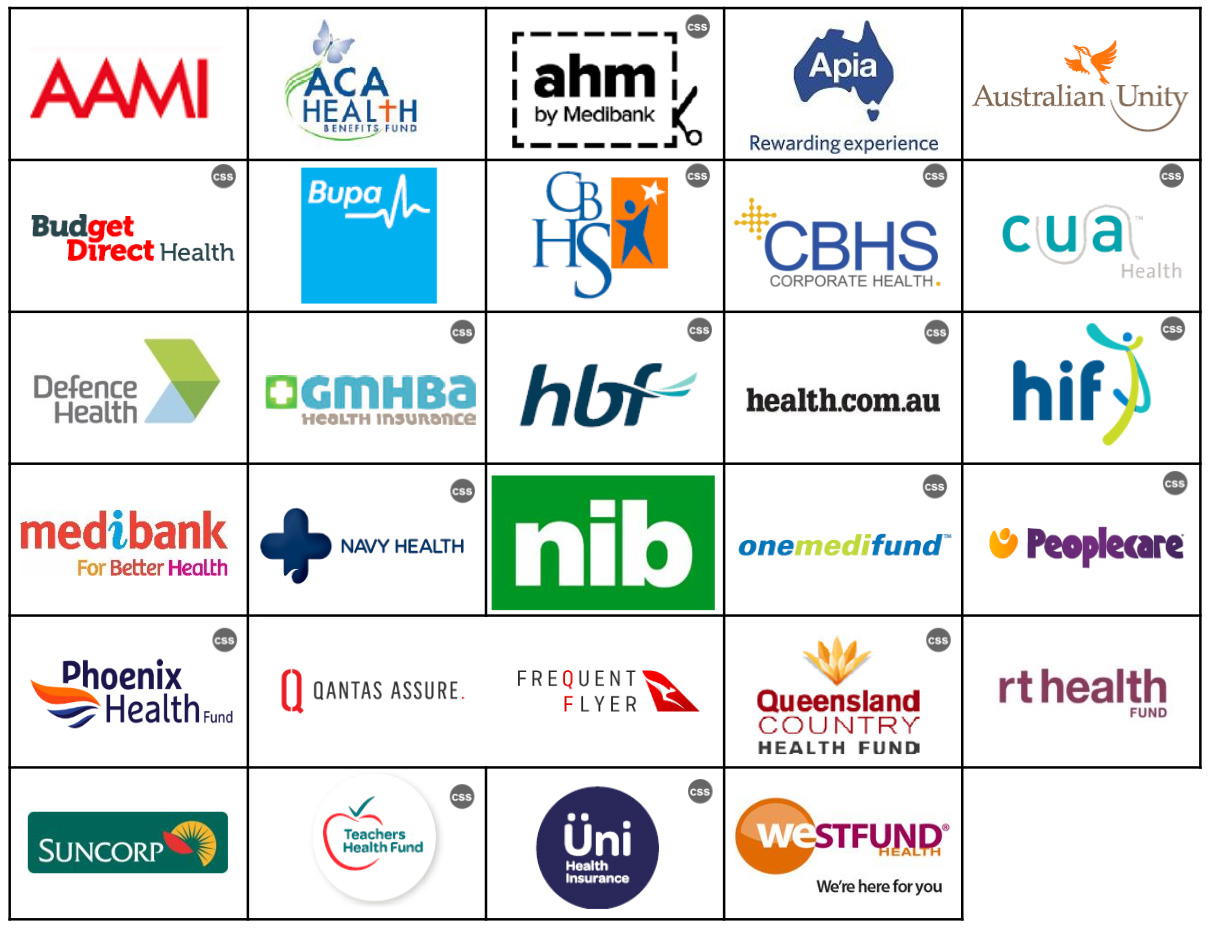
We are able to provide you with a health fund rebate using our HICAPS system. Some of the health funds that are claimable through our HICAPS machine for Acupuncture are as follows.
Gold Coast Location
The Gold Coast Acupuncture Clinic is located in the Albert Centre at 5/18 Ferry Street, Nerang.
This is also a great location for our customers in the surrounding suburbs of Nerang including Gilston, Highland Park, Mount Nathan, Carrara, Ashmore, Gaven, Molendinar, Worongary, Helensvale, Coomera, Hope Island, Oxenford, Upper Coomera, Pimpama, Ormeau, Maudsland, Willowvale and Tamborine Mountain.
Book your Acupuncture to Induce Labour appointment
Call our Clinic
You may call us at our Nerang clinic directly.
Phone: (07) 5573 6601
Book Online 24/7
You may book an appointment online by clicking here.
References
[1] Smith CA, C. C. (2004), Acupuncture for induction of labour, The Cochrane Database of Systematic Reviews (1).
[2] Better Health Victoria Pregnancy – week by week
[3] Bell C. Autonomic nervous control of reproduction: circulatory and other factors. Pharmacological Reviews 1972;24:657‐763.
[4] Tempfeer C, Zeisler H, Heinzl H, Hefler L, Husslein P, Kainz CH. Influence of acupuncture on maternal serum levels of interleukin‐8, prostaglandin F2 alpha, and beta‐endorphin: a matched pair study. Obstetrics & Gynecology 1998;92(2):245‐8.
[5] QLD Health Website, Induction of labour and augmentation – Risks of induction