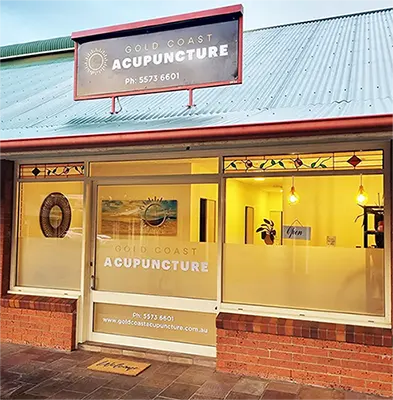
Gold Coast Acupuncture offers you high quality Acupuncture and Chinese Medicine treatments by experienced Acupuncturists at their Nerang clinic.
Welcome to Gold Coast Acupuncture
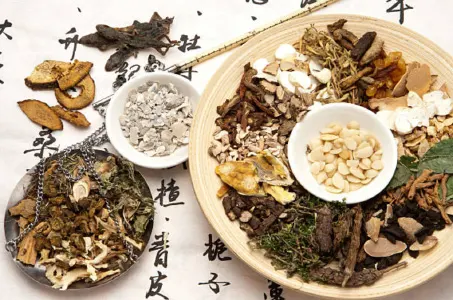
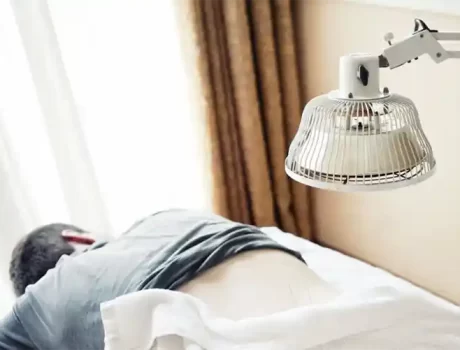
Gold Coast Acupuncture and Chinese Medicine ™ offers you a wide range of alternative treatments based on TCM (Traditional Chinese Medicine). We provide Acupuncture, Herbal Medicine and Heat Therapy.
Gold Coast Acupuncture offers high quality Acupuncture treatments provided by qualified practitioners with years of clinical experience.
We offer an innovative approach to treatment with Neoclassical Acupuncture. This palpatory, feedback-based style of Acupuncture enables us to understand how the body is responding in real time with each needle placement.
While Neoclassical Acupuncture is at the core of our practice, we also draw from a range of traditional and modern Acupuncture styles to create a tailored, holistic treatment for every client.
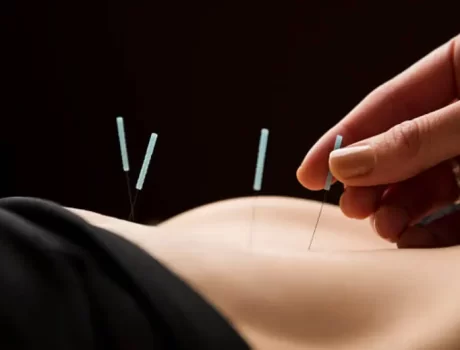
To ensure a comfortable and virtually painless experience, we use only the finest sterile, single-use, ultra-smooth Japanese needles for optimal safety and comfort.
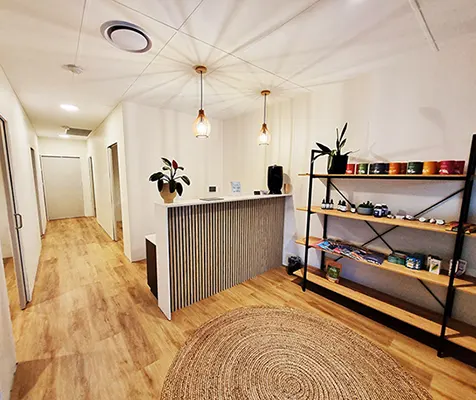
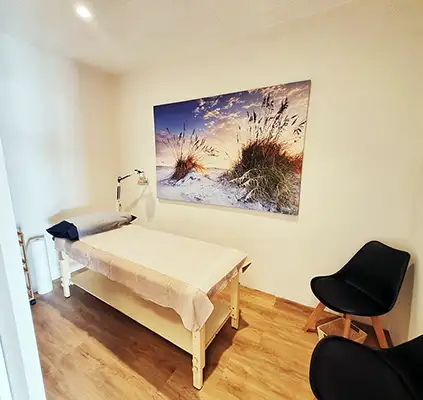
Our practitioners care about your health and all appointments are designed so you receive quality time with the practitioner. Our treatment rooms are large, private and well presented which offer you a nurturing and supportive atmosphere allowing the perfect healing environment.
Visit our Nerang Acupuncture clinic which is located at Shop 5, 18 Ferry Street, Nerang QLD 4211.
All heat therapy treatments are performed by qualified and professional therapists.
How can Acupuncture and Chinese Medicine help me?
Acupuncture is a form of alternative medicine in which thin needles are inserted into the body. It is a key component of traditional Chinese medicine (TCM). The staff at our Acupuncture Gold Coast clinic are trained and qualified to provide you with the highest standards of practice and treatment. Find out more about our [Acupuncture Services]
Conditions
Our practitioners aim to provide support and reduce the symptoms associated with common conditions.
Pain
Acupuncture has been shown to help relieve inflammatory pain, addressing both the physical sensations and the emotional discomfort that often come with it. Pain can arise from a wide range of common conditions, including headaches, migraines, neck and back pain, muscle tension, arthritis, and sports-related injuries.
When fine needles are gently inserted at specific points on the body, they stimulate natural healing responses and encourage the release of the body’s own pain-relieving and anti-inflammatory chemicals, such as endorphins and serotonin. These natural substances help calm the nervous system, reduce inflammation, and improve blood flow, all of which can contribute to easing pain and restoring balance.
Research suggests that acupuncture works through several interconnected pathways — acting locally where the needles are inserted, through the spinal cord, and within the brain. These effects help modulate pain signals, support the immune system, and promote the body’s natural ability to heal.
Scientific studies have found that acupuncture may relieve (both sensory and affective) inflammatory pain [1], can increase the release of β-endorphins in inflamed tissues [2], regulate immune and nervous system communication [3], and influence brain activity related to pain processing [4].
By working with the body’s own systems rather than against them, acupuncture may help reduce inflammation, ease discomfort, and support overall wellbeing — offering a gentle, holistic approach to managing both acute and chronic pain.
Migraine prophylaxis
For migraine prophylaxis, acupuncture was rated as ‘effective’ in the Australian DVA review (2010) and ‘evidence of positive effect’ in the USVA Evidence map of acupuncture {2014} (5, 6). Find out more about [Migraine Acupuncture]
Headache
The most recent Cochrane systematic review update confirmed that acupuncture is effective for frequent episodic and chronic tension-type headaches with moderate to low quality evidence (43). A brief review of systematic reviews and meta-analyses described acupuncture as having a ‘potentially important role as part of a treatment plan for migraine, tension-type headache, and several different types of chronic headache disorders’ (44). Find out more about [Headache Acupuncture]
Low back pain
In a systematic review of 32 randomised controlled trials for acupuncture treatment of chronic non-specific low back pain, acupuncture was superior (both statistically and clinically significant) to sham acupuncture in pain reduction and improved function immediately after treatment (46). Find out more about [Low Back Pain Acupuncture]
Knee osteoarthritis pain
Knee osteoarthritis pain was rated as ‘evidence of potential positive effect’ in the USVA Evidence map of acupuncture (2014) (5, 6). Acupuncture was also superior to standard care and muscle-strengthening exercises in a sub-analysis of moderate to high quality studies (52). Find out more about [Knee Osteoarthritis Acupuncture]
Allergic rhinitis
For allergic rhinitis, acupuncture was rated as ‘effective’ in the Australian DVA review (2010) (5, 6). A systematic review of 13 randomised controlled trials concluded that ‘acupuncture could be a valid treatment option for allergic rhinitis’ (moderate quality evidence) (54). More about [Allergic Rhinitis Acupuncture]
Nausea and vomiting
For chemotherapy-induced nausea and vomiting, acupuncture was rated as ‘effective’ in the Australian DVA review (2010). For post-operative nausea and vomiting, acupuncture was rated ‘potential positive effect’ in the USVA Evidence map of acupuncture (2014) (5, 6). Find out more about [Acupuncture for Nausea and Vomiting]
Post-operative pain
A systematic review and meta-analysis of 13 RCTs in 2016, found that acupuncture, electroacupuncture (EA) and transcutaneous electrical acupoint stimulation (TEAS) improved pain on day one after surgery and reduced opioid use (17). More about [Acupuncture for Pain]
Stress and Anxiety
A systematic review from 2015 titled “Effects of acupressure on anxiety: a systematic review and meta-analysis” showed the Acupressure is effective in reducing anxiety (201). More about [Acupuncture for Stress and Anxiety]
Sciatica and Sciatic Pain
Pooled analysis of nine studies with 780 patients in the acupuncture group and 771 in the medication group revealed that acupuncture was significantly more effective than conventional medication. More about [Acupuncture for Sciatica and Sciatic Pain]
Pain relief and management, Stress, Chronic pain related to depression by managing the underlying chronic pain.
The above research suggests that Acupuncture may provide beneficial outcomes however other papers did not have the same findings so the evidence is regarded as mixed.
Therapies available at our Clinic
Acupuncture Needling
Acupuncture is a form of alternative medicine in which thin needles are inserted into the body. It is a key component of traditional Chinese medicine (TCM). The needles are manipulated manually or the needle may be further stimulated by electrical stimulation (electroacupuncture). Dry needling is another name for what we would refer to as Myofascial Acupuncture, Tendinomuscular Acupuncture and/or Sports Acupuncture.
Ultra-Smooth Acupuncture Needles are used in all treatments
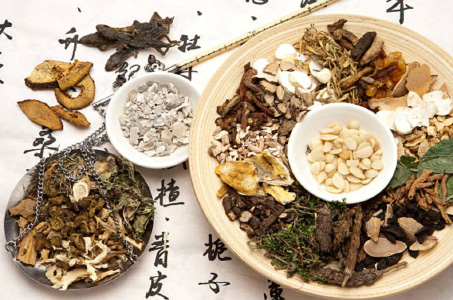
Chinese Herbal Medicine
Chinese Herbal Medicine is provided as an option with all Acupuncture treatments at our clinic. This involves the prescription of a herbal formula (herbs) as part of treatment for specific conditions. Click for more information about [Chinese Herbal Medicine and Chinese Herbs].
Our Location
Contact Us
We are generally open Monday (8:00am to 6:00pm), Tuesday (8:00am – 11:00am), Thursday (8:00am – 6:00pm) and Friday (8:00am – 12:00pm).
Our clinic is closed on Wednesdays, Saturdays and Sundays.
You may call us at our Nerang clinic directly on the following number.
Phone: 5573 6601
Reception hours are Monday to Friday 8:30am – 5:00pm. Outside reception hours we cannot guarantee that your call will be answered and therefore we recommend using our online booking service. Outside of these reception hours a practitioner may be able to take your call however if not please leave a message and your call will be returned as soon as possible.
5. Biotext. Alternative therapies and Department of Veterans’ Affairs Gold and White Card arrangements. In: Australian Government Department of Veterans’ Affairs, editor: Australian Government Department of Veterans’ Affairs; 2010.
17. Wu MS, Chen KH, Chen IF, Huang SK, Tzeng PC, Yeh ML, et al. The Efficacy of Acupuncture in Post-Operative Pain Management: A Systematic Review and Meta-Analysis. PLOS ONE. 2016;11(3):e0150367.
43. Linde K, Allais G, Brinkhaus B, Fei Y, Mehring M, Shin BC, et al. Acupuncture for the prevention of tension-type headache. Cochrane Database Syst Rev. 2016;4:Cd007587.
44. Coeytaux RR, Befus D. Role of Acupuncture in the Treatment or Prevention of Migraine, Tension-Type Headache, or Chronic Headache Disorders. Headache. 2016 Jul;56(7):1238-40.
46. Lam M, Galvin R, Curry P. Effectiveness of acupuncture for nonspecific chronic low back pain: a systematic review and meta-analysis. Spine (Phila Pa 1976). 2013 Nov 15;38(24):2124-38.
52. Corbett MS, Rice SJ, Madurasinghe V, Slack R, Fayter DA, Harden M, et al. Acupuncture and other physical treatments for the relief of pain due to osteoarthritis of the knee: network meta-analysis. Osteoarthritis Cartilage. 2013 Sep;21(9):1290-8.
54. Feng S, Han M, Fan Y, Yang G, Liao Z, Liao W, et al. Acupuncture for the treatment of allergic
201. Au DW, Tsang HW, Ling PP, Leung CH, Ip PK, Cheung WM. Effects of acupressure on anxiety: a systematic review and meta-analysis. Acupunct Med. 2015 Oct;33(5):353-9.